PING IDENTITY
IDENTITY SECURITY FOR THE DIGITAL ENTERPRISE
2025 - PRESENT
IDENTITY SECURITY FOR THE DIGITAL ENTERPRISE
2025 - PRESENT
From scarcity to abundance
I joined Ping Identity with a clear mandate: fix a creative function that had become a bottleneck for marketing. Demand was growing, but limited capacity and inefficient workflows made it difficult for the team to keep pace.
I focused first on rebuilding how the team operated, creating clearer priorities, increasing capacity, and enabling creative to respond at the speed the business required.
The impact was immediate. Creative output increased dramatically, paid social production scaled, and the team became a more responsive partner to the broader organization.


The bottleneck vanished overnight.
Leadership feedback on the transformation
Leadership feedback on the transformation

Scaling creative to support growth
I rebuilt the way creative work moved through the organization, establishing clearer priorities, more efficient workflows, and repeatable production systems.
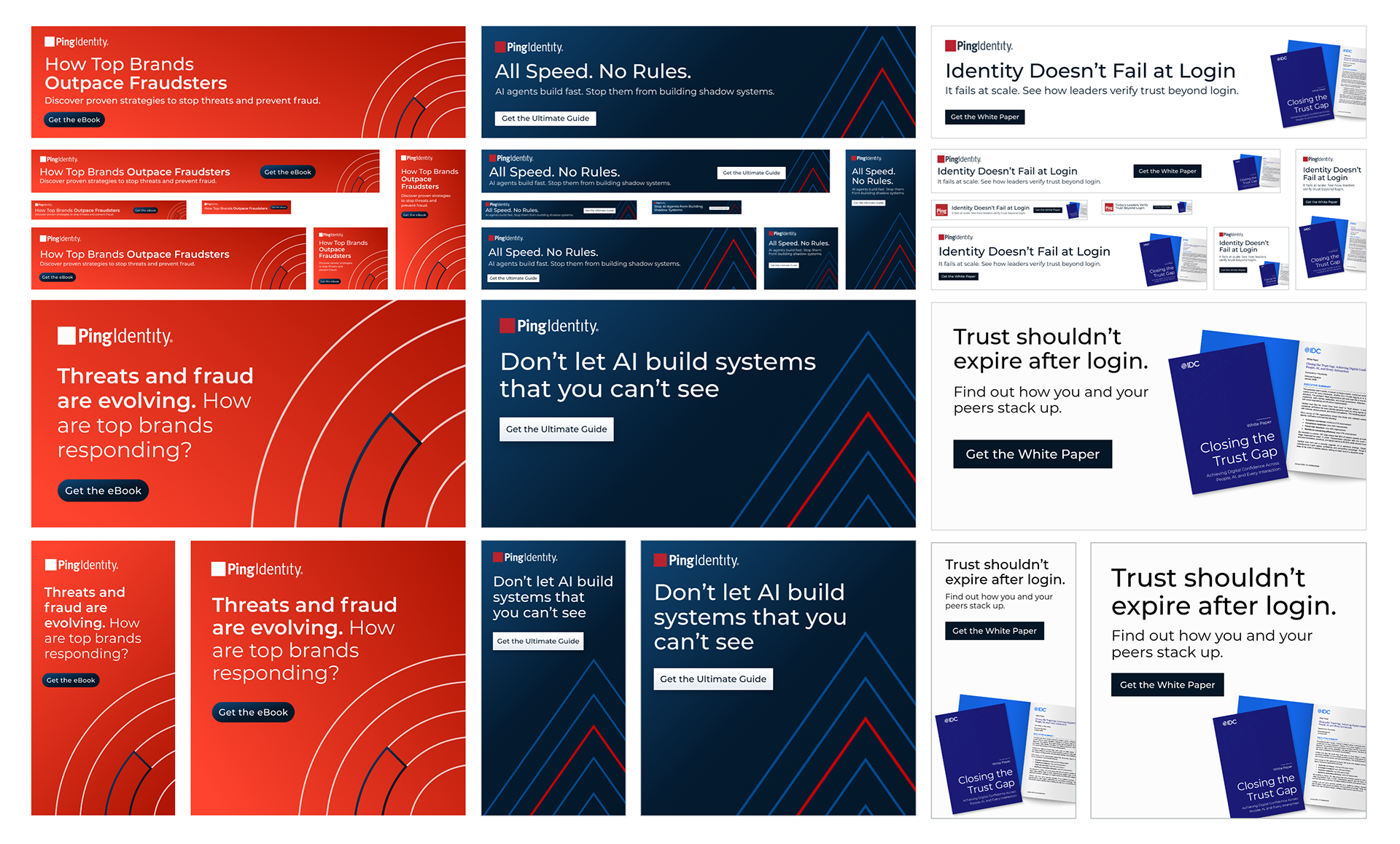
Automation and AI-enabled processes reduced repetitive tasks, including ad resizing and localization, allowing the team to focus more time on higher-value creative work.
What emerged was a more responsive, scalable organization capable of meeting growing global marketing demands without sacrificing quality.
Raising the creative standard
Increasing output was only part of the transformation. The work itself needed to evolve.
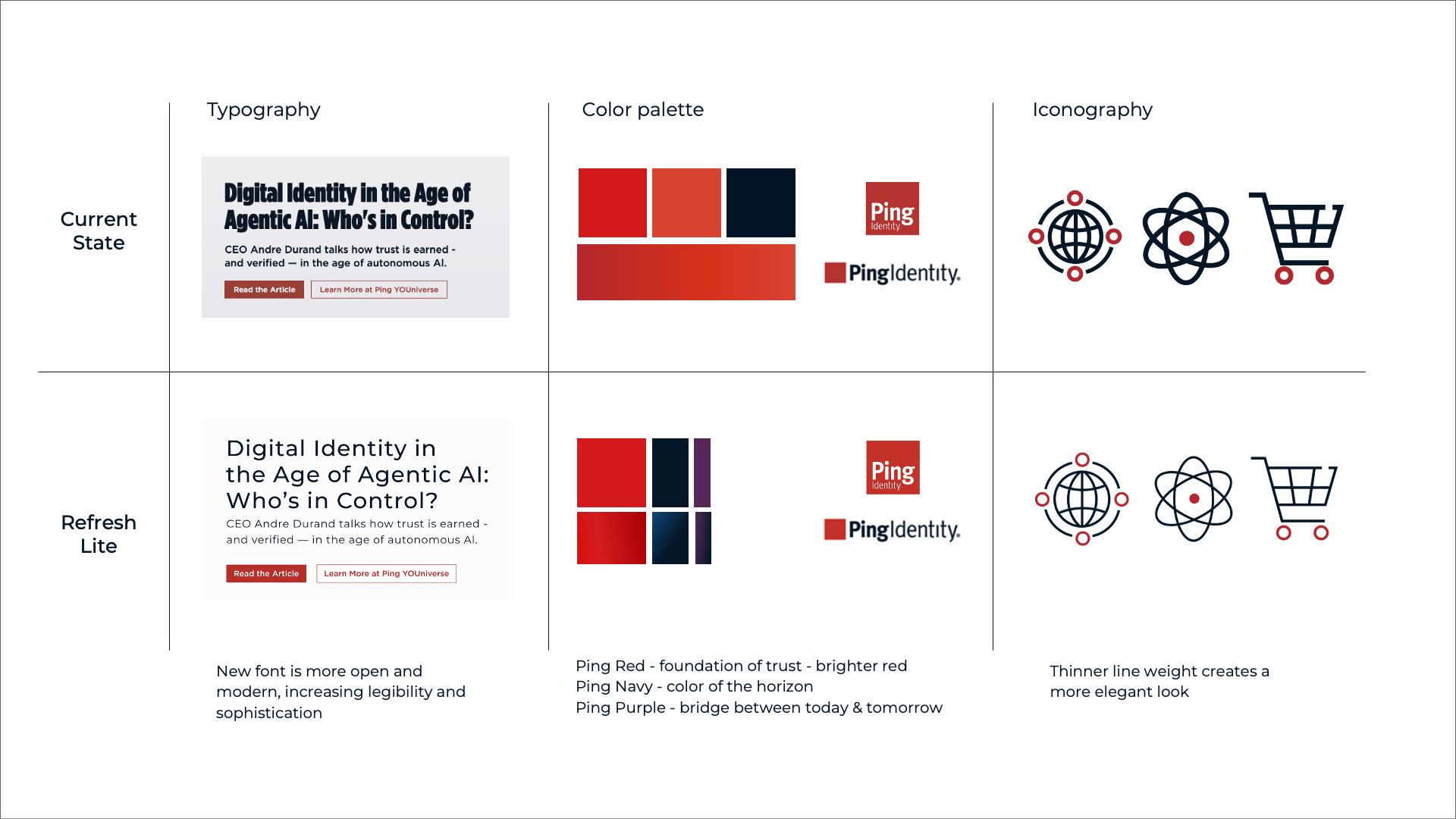
I led the evolution of Ping's visual system, bringing greater consistency, clarity, and sophistication to how the brand appeared across campaigns, digital experiences, and marketing programs.
The result was a more cohesive creative foundation that improved execution while giving the team greater freedom to develop distinctive, high-impact work.

Elevating executive storytelling
As the creative function matured, our contribution expanded beyond traditional marketing deliverables.
I partnered with senior leaders to translate complex business strategies, product innovations, and market opportunities into compelling visual narratives, executive presentations, and video experiences.
This work increasingly supported high-stakes business moments where clarity, credibility, and execution mattered.
In Q3 2026, our presentation and video contributions were specifically recognized by sales leadership for helping secure a $3.7 million customer deal.
It was further evidence that creative had become a trusted contributor to business outcomes, not simply a production resource.

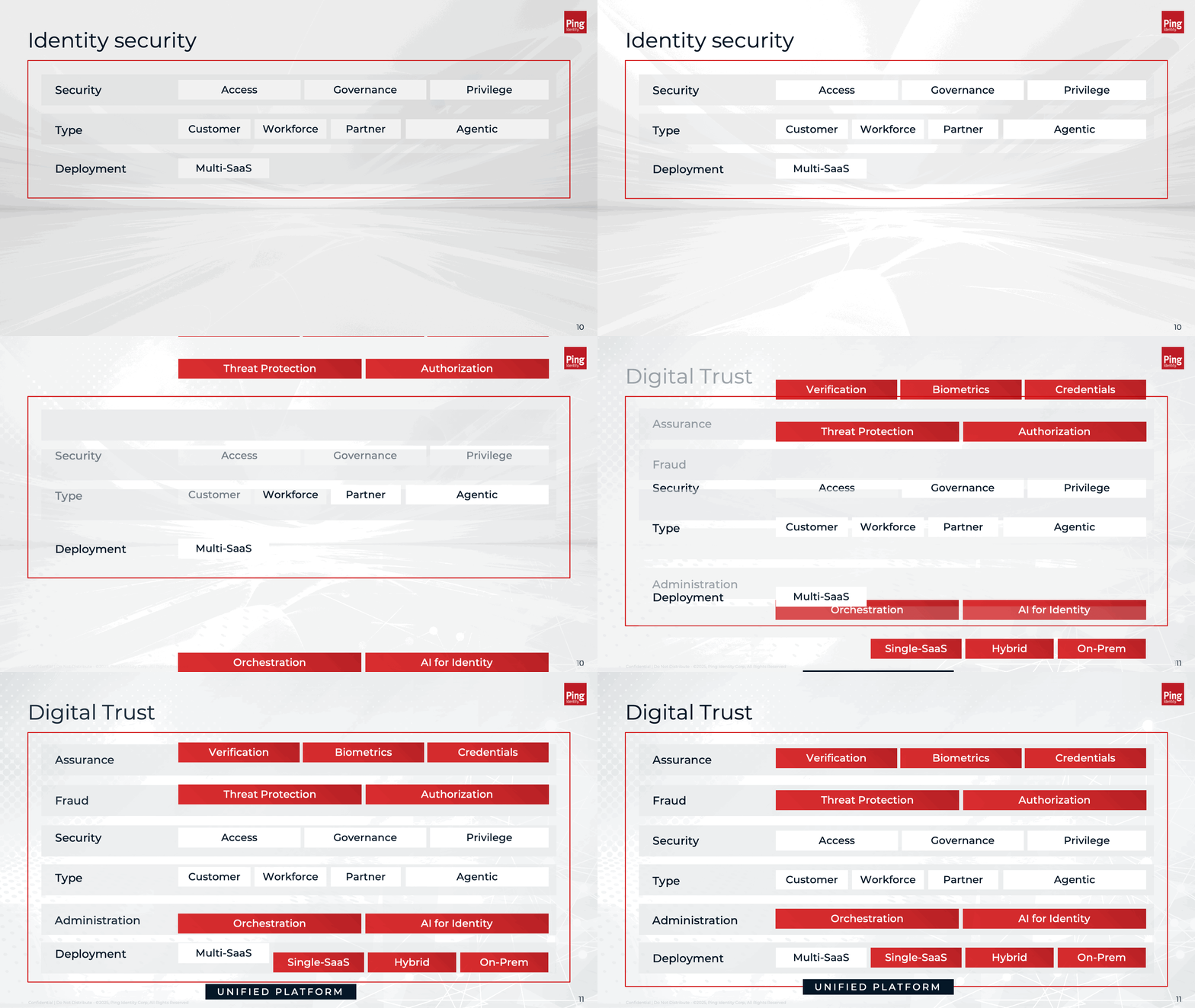
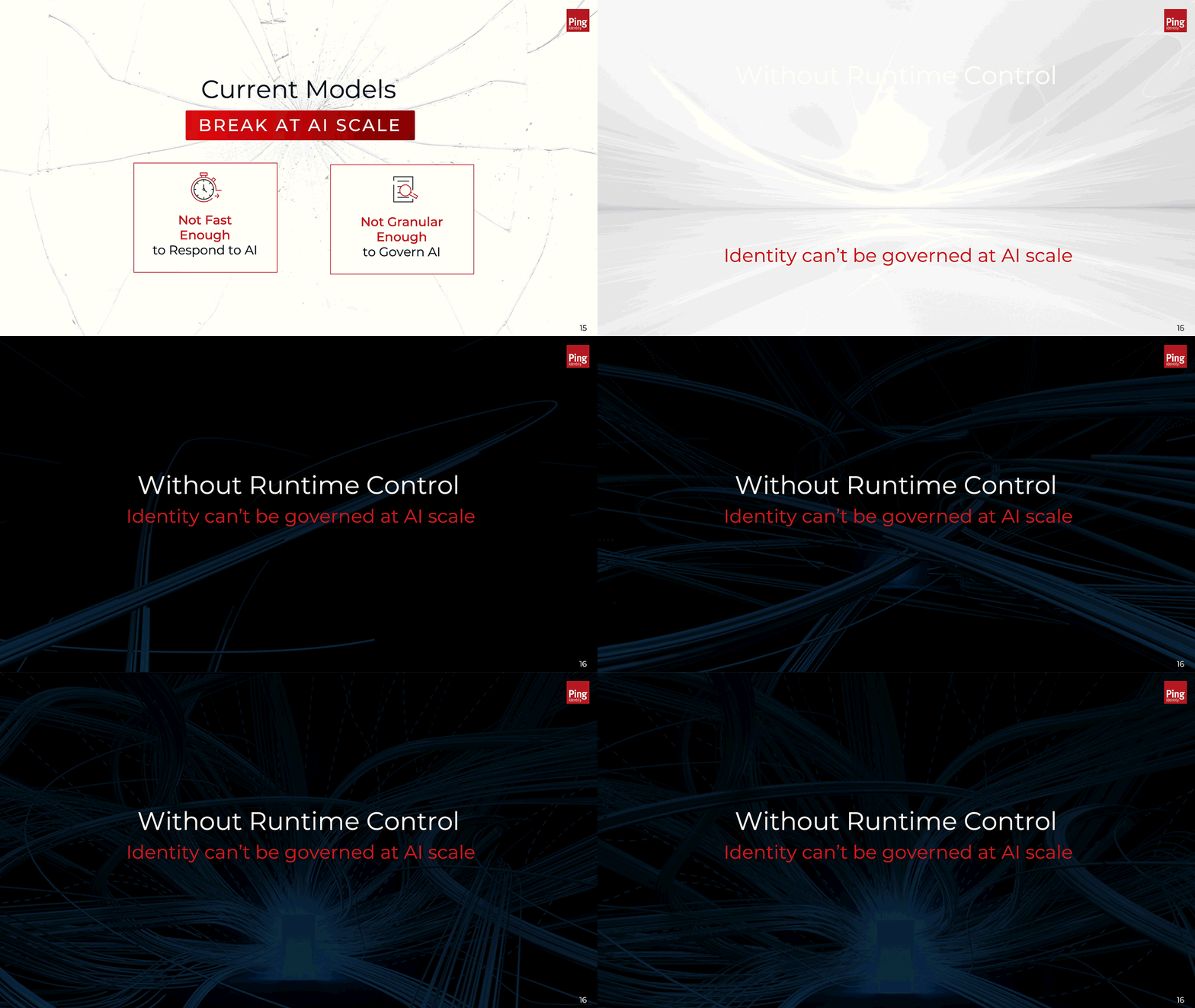

“Super strong.”
Andre Durand, CEO & Founder, on the Vision presentation
Andre Durand, CEO & Founder, on the Vision presentation

From product launch to category creation
A NEW IDENTITY NARRATIVE FOR THE AI ERA
Ping's Identity for AI launch presented an opportunity to address a fundamental shift in the market: autonomous AI agents were creating security challenges that extended beyond traditional, point-in-time authentication.
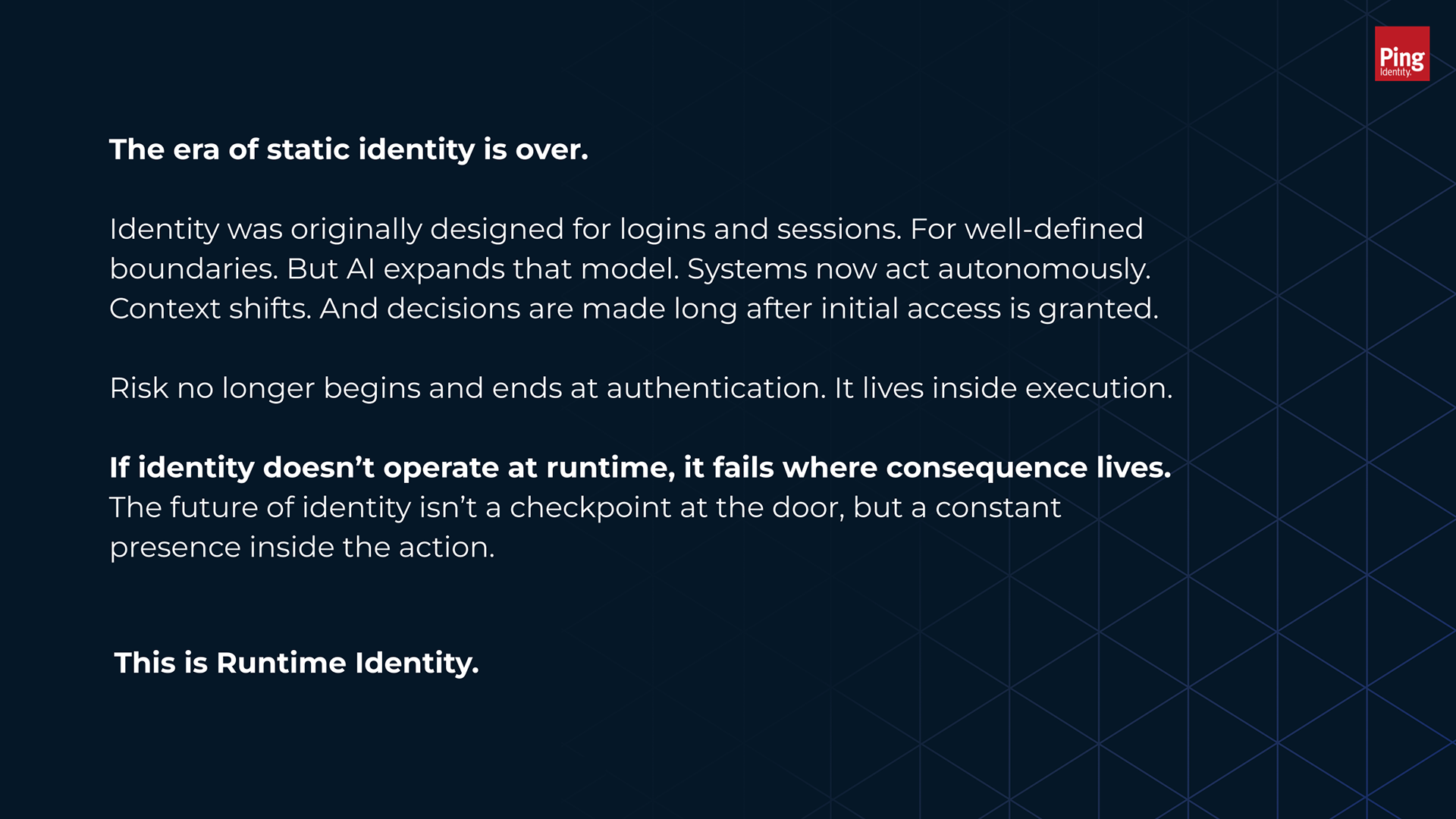
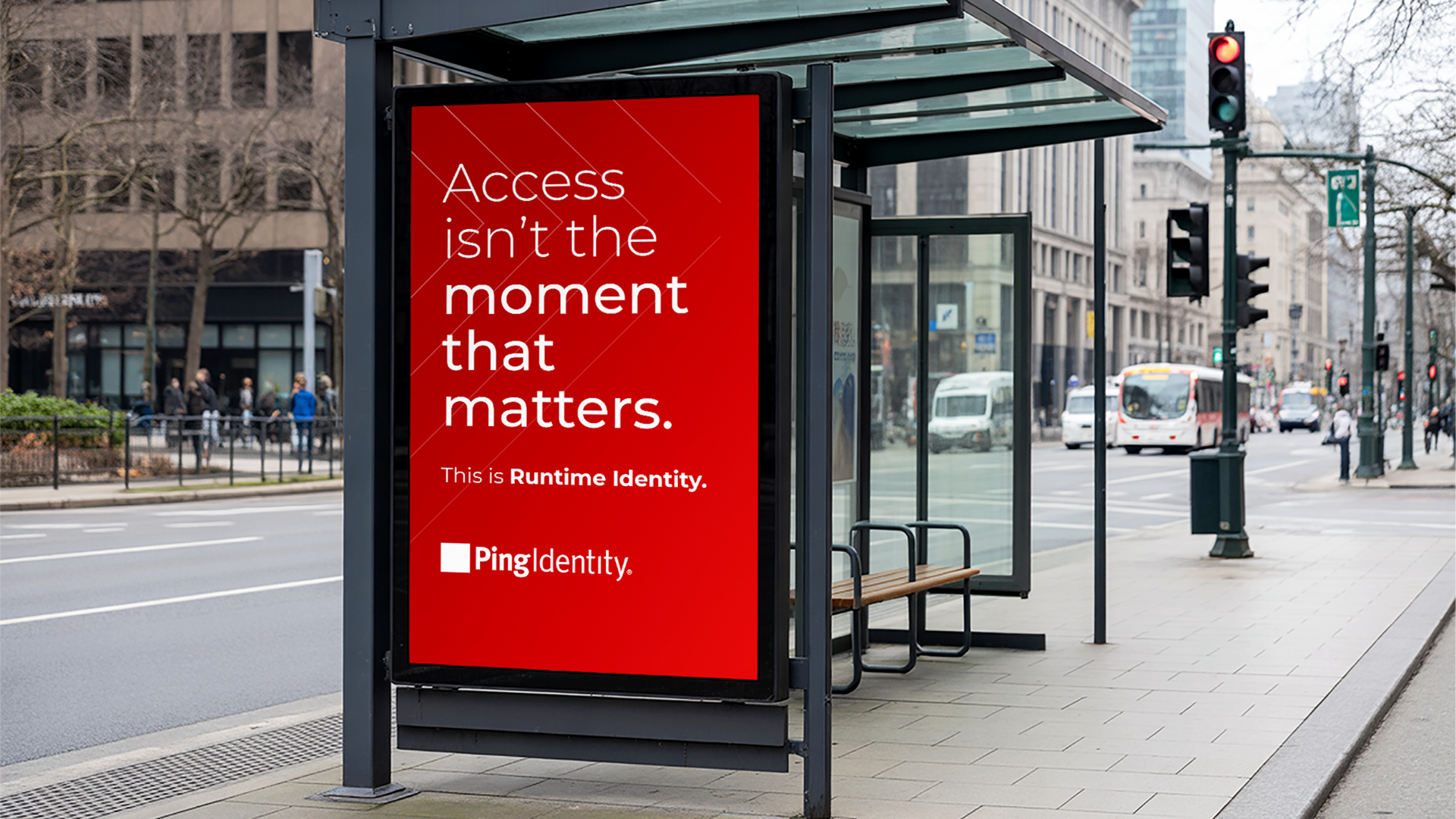
During creative concept development, I originated Runtime Identity, introducing a new way to frame identity around continuous evaluation of risk, context, and authority while users, machines, and AI agents are active.
The concept, introduced through the original manifesto below, earned executive endorsement and became a central narrative for Ping's March 2026 launch. What began as a creative idea evolved into a differentiated market position, brought to life through an integrated brand campaign.

Connecting the experience across channels
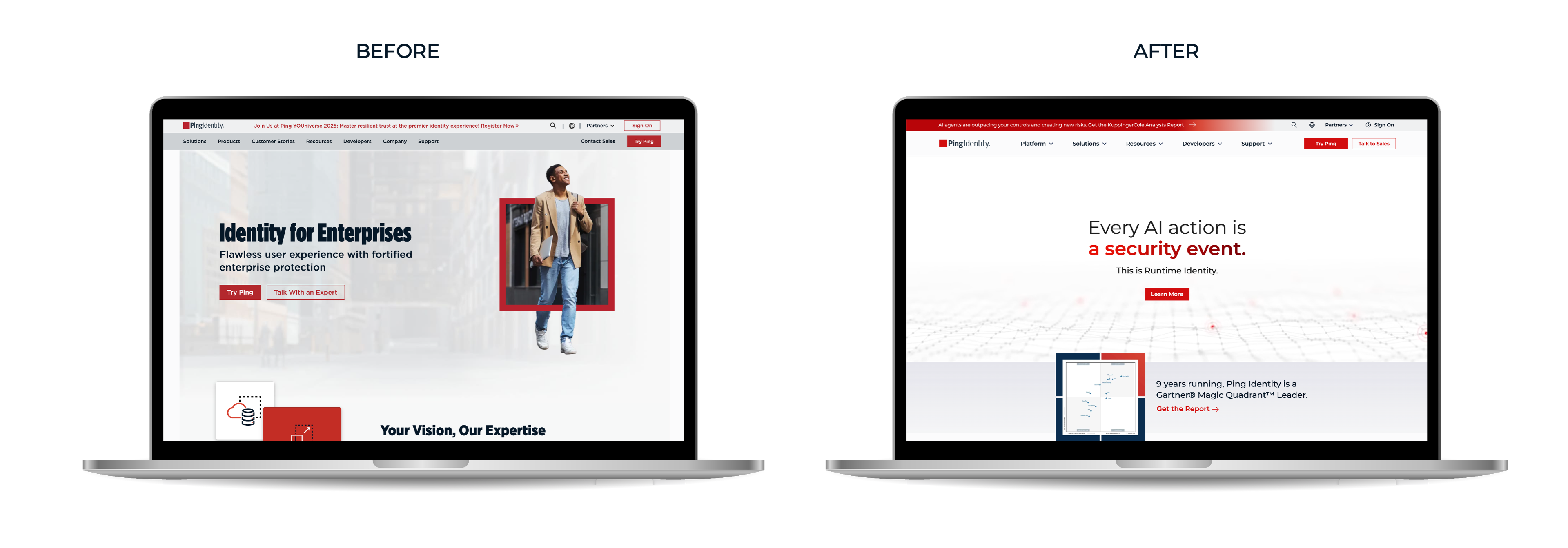
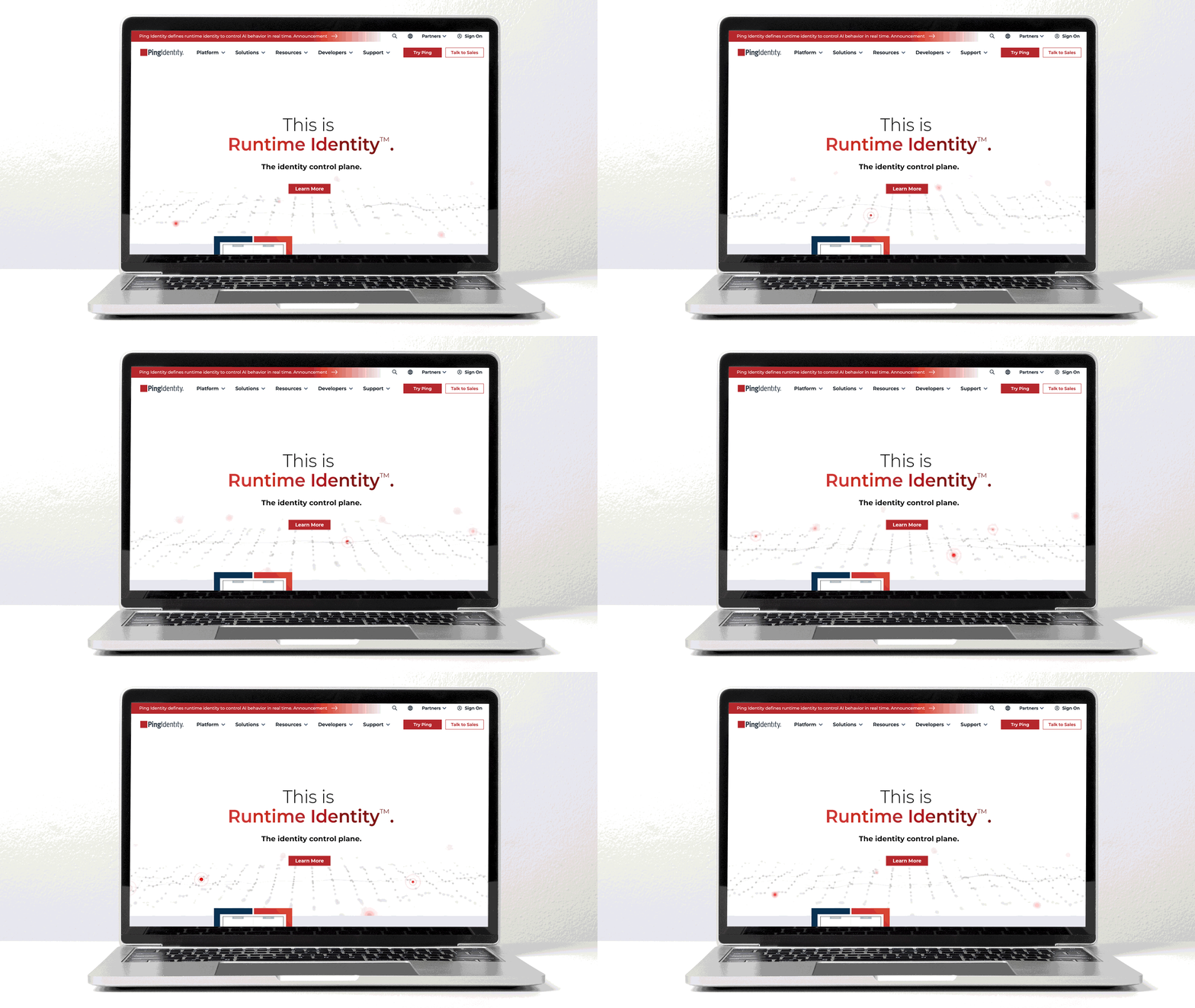
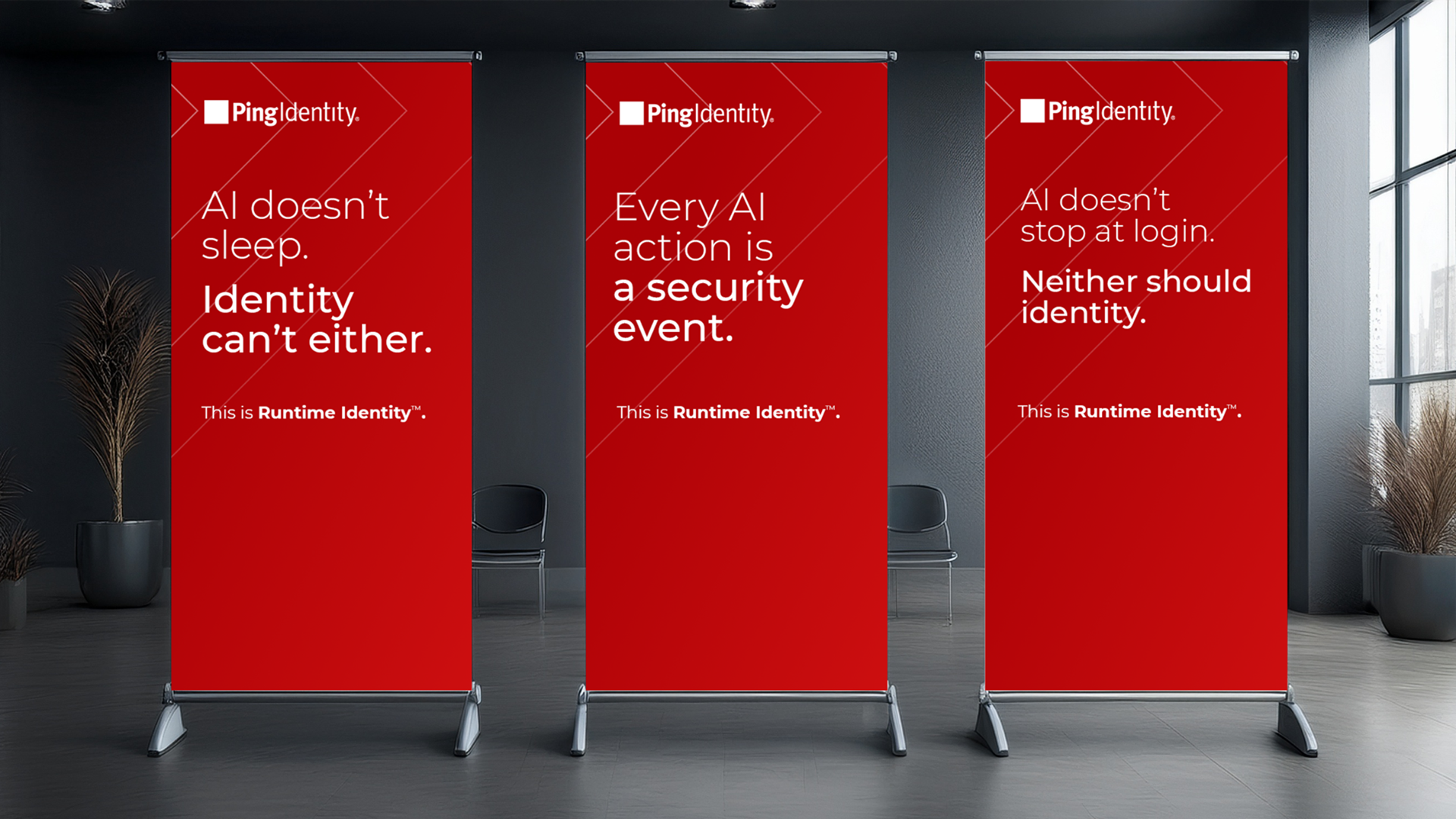
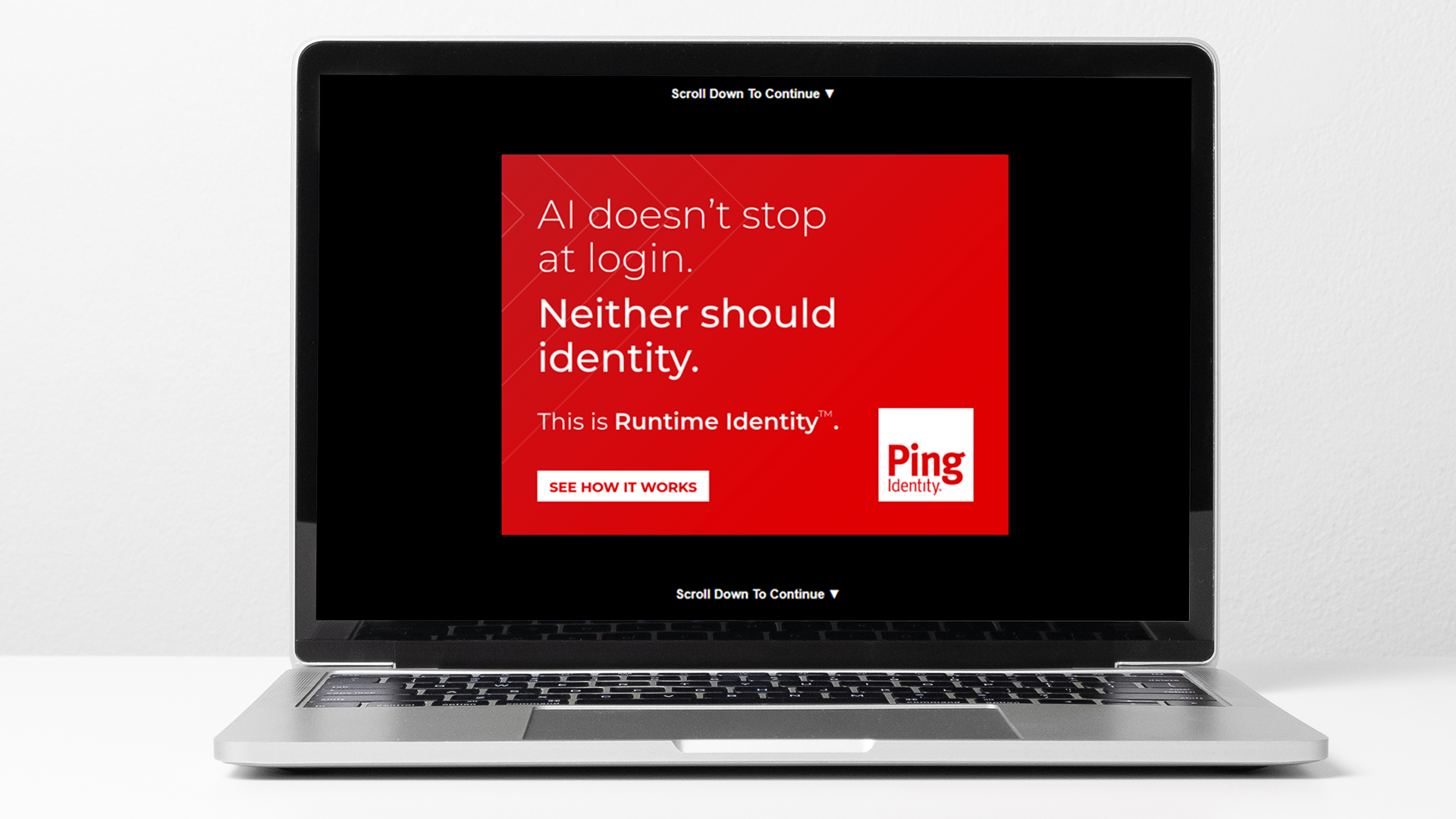
I extended that creative direction into digital and campaign experiences, connecting brand storytelling with clearer messaging, stronger visual consistency, and more cohesive execution.
From web experiences to integrated campaign assets, the objective was to build a connected brand presence that could support both awareness and engagement.
Together, these touchpoints demonstrated how a strategic idea could be expressed consistently across the customer journey.
Building the capabilities to shape what's next
What began as an operational turnaround became a broader transformation of brand and creative's role at Ping Identity.
We dramatically increased production capacity, strengthened the creative standard, earned greater trust in high-stakes business moments, and expanded our influence into strategic positioning.
The achievement wasn't simply producing more or making better work.
It was building a creative organization that could help the business compete, differentiate, and grow.